

Color-coated aluminum coils are widely used in architectural panels, roofing, curtain walls and other building and industrial applications because of their light weight, corrosion resistance, attractive finish and ease of fabrication. Even if you receive color-coated aluminum coils with excellent coating and surface finish, the storage conditions on site after arrival are decisive for maintaining the coating quality. Improper storage can degrade coating adhesion, alter appearance and shorten service life.
Why Storage Conditions Matter for Color-Coated Aluminum Coils
The coating applied on aluminum (for example, polyester (PE), PVDF, SMP or HDP coating) protects from corrosion, UV and wear, but the underlying aluminum substrate and the coating-substrate interface remain vulnerable if exposed to unfavorable environmental conditions. Moisture, humidity, condensation, temperature swings, mechanical stress or pollutants can compromise adhesion or cause corrosion under the coating. When coils are tightly wound during packing, trapped moisture or condensation between coil laps may persist for a long time, potentially damaging the coil from the inside out, even if the outer surface seems intact.
Even the most advanced coating technology cannot fully protect against improper storage that allows accumulation of moisture or stress over time.
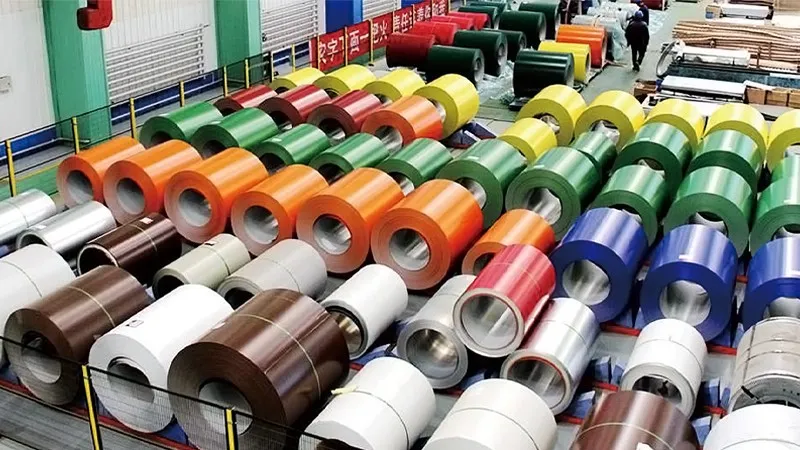
Common Risks Associated with Improper Storage
Moisture, Condensation and Corrosion
Humidity or condensation is the most frequent cause of coating degradation in stored color-coated aluminum coils. If coils are stored in a damp warehouse or moved too quickly from a cold truck to a warm warehouse, surface moisture can form. That moisture may migrate between the laps of the coil, remain trapped and lead to oxidation of the aluminum substrate or under-film corrosion. The risk is higher if coils are stacked tightly or stored without ventilation.
Even if external surfaces appear dry, water trapped inside coil layers can slowly undermine adhesion and eventually cause delamination or rusting under the coating.
Temperature Fluctuations and Thermal Stress
Aluminum coils expand and contract with changes in ambient temperature. Repeated cycles of heating and cooling can impose stress on the coating and on the coating-substrate bond. Sudden or frequent temperature fluctuations, for example, moving coils from unheated storage to a heated area, may provoke condensation or stress that leads to micro-cracks or coating crazing over time.
Some coating systems may lose flexibility or become brittle if stored under unsuitable temperature and humidity conditions for extended periods, making them more prone to cracking or chipping when the coil is later unwound, cut or formed.
Contaminants, Pollutants and Chemical Exposure
If coils are stored in industrial or coastal environments with polluted air, corrosive gases, salt spray or chemical vapors, these contaminants can settle on the surface. Even if the coating seems intact, pollutants may penetrate minor imperfections or edges, attacking the aluminum substrate and causing localized corrosion or coating deterioration.
Dust, debris or abrasive particles accumulating on coil surfaces may scratch or abrade the coating when coils are moved or processed. Such mechanical damage can expose bare aluminum and greatly increase corrosion risk.
Physical Damage: Dents, Deformation, Packaging-Related Issues
When coils are placed directly on hard concrete floors, uneven ground or without proper supports, the heavy weight may lead to deformation, ovalisation, pressure marks or indentations. This can stress or damage the coating at contact points or edges.
Improper handling, for instance, dragging coils across floor or sliding them, may cause scratches or gouges in the coating, exposing the aluminium substrate to moisture and oxygen. Once exposed, corrosion can begin rapidly.
If protective films from packaging remain on the surface for too long, or if packaging is damaged or reused incorrectly, the coating surface can be compromised, leading to discoloration, sticking, or difficulty removing the film before processing.
Shelf Aging and Long-Term Storage Effects
Even under controlled storage conditions, long-term storage without use can influence coating performance. Over time, certain coatings may gradually lose flexibility or become more brittle, reducing resistance to bending or forming operations. This can result in cracking or loss of gloss when the coil is finally processed.
Extended storage may also increase the chances of contaminants' ingress, especially in environments where ventilation or humidity is not strictly controlled. Regular inspection and maintenance are therefore essential.
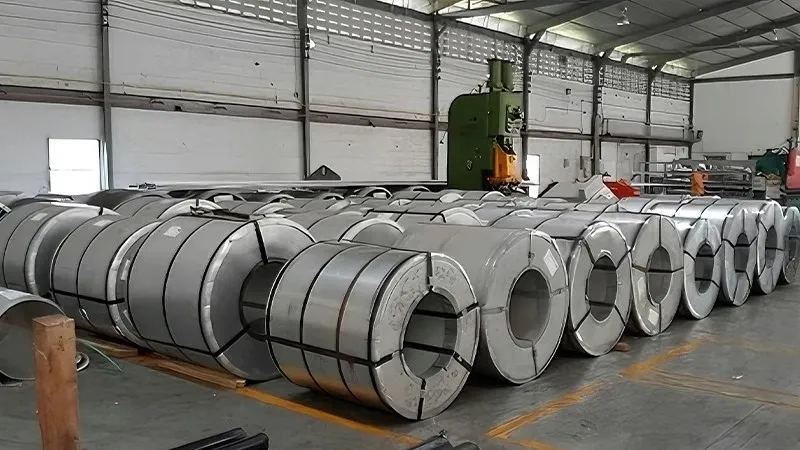
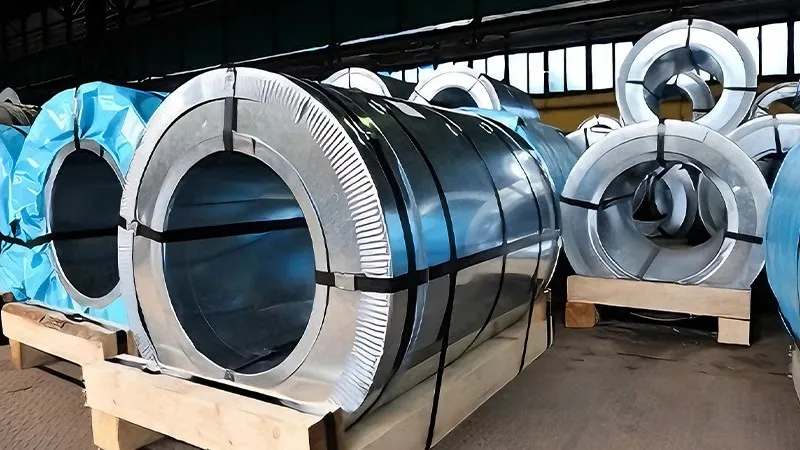
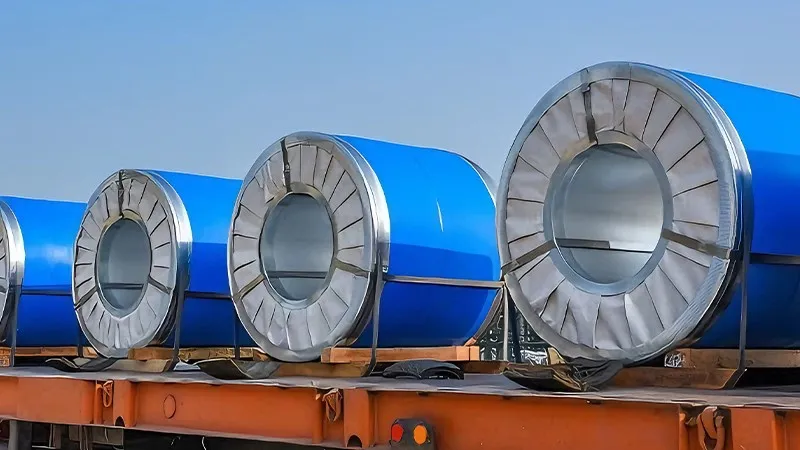
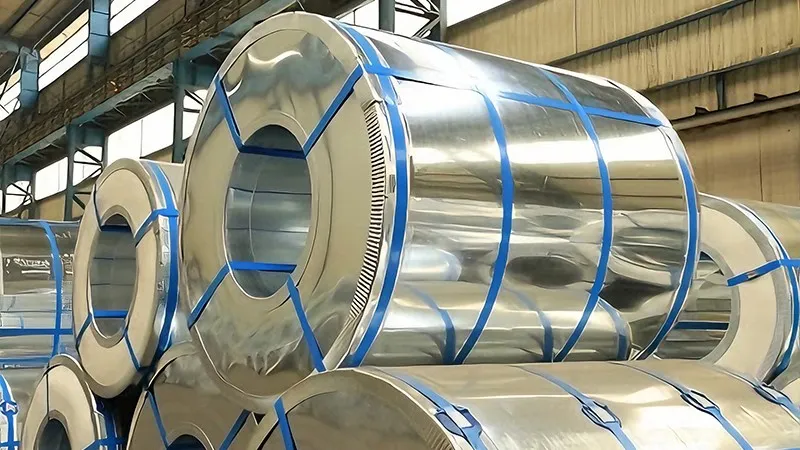
Recommended Best Practices for Storing Color-Coated Aluminum Coils
To ensure the coating quality of color-coated aluminum coils remains intact after arrival, the following storage protocols are strongly recommended:
Store coils indoors in a clean, dry and well-ventilated warehouse with stable temperature and humidity. Prefer climate-controlled storage if possible.
Allow coils time to acclimate before unpacking: for example, when moving coils from cold transport to a warmer warehouse, leave them sealed in packaging for 36–48 hours to avoid condensation.
Use proper supports: place coils on wooden pallets, rubber mats or felt pads rather than directly on concrete floor. Specialized stillages with V-shaped supports help prevent deformation and ensure even load distribution.
Ensure adequate airflow around each coil to allow evaporation of any residual moisture. Do not stack coils tightly without separators; if stacking is unavoidable, use wooden or rubber separators.
Keep relative humidity under control, ideally below 50–60%, using dehumidifiers or desiccants in humid or coastal climates, to minimize condensation and corrosion risk.
Handle coils carefully: use appropriate lifting equipment, such as forklift or crane with padded slings; avoid dragging or sliding coils to prevent coating scratches.
Remove protective packaging film at an appropriate time - ideally shortly before processing. Avoid leaving protective film on coils for excessive periods, which may complicate removal or degrade adhesion over time.
Perform regular inspections during storage. Periodically check for signs of condensation, rust, coating damage, packaging degradation or deformation. Early detection allows corrective actions before defects spread.
If you would like guidance on designing or selecting a suitable storage facility for your color-coated aluminum coils, or you need specific recommendations tailored to your climate or warehouse conditions, you are welcome to contact us for professional consultation.