

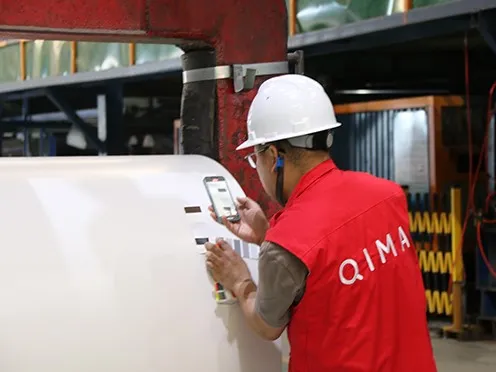
The common inspect term for the adhesion of color coated aluminum coils include the hundred-grid knife scratch test, pencil hardness scratch type, reverse impact and T-bend method. The following are the specific test methods and standards for each project.
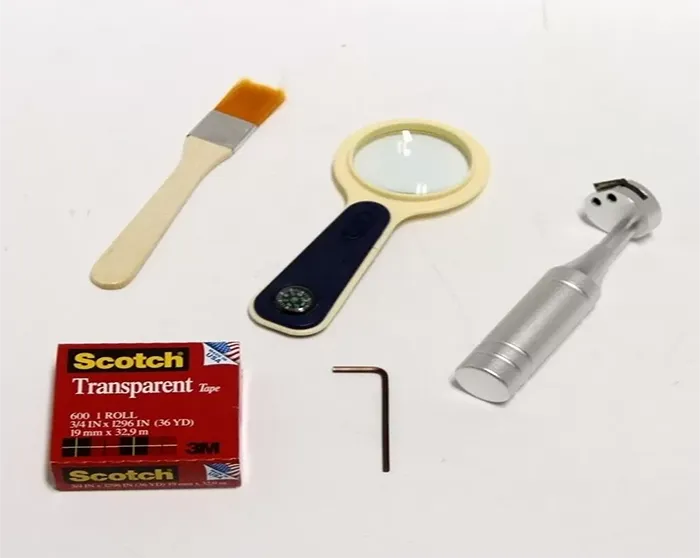
cross-cut test
Test method:Use the grid knife to draw 10X10 (100) 1mmX1mm small grids on the surface of the test sample. Each line should be deep enough to reach the primer of the paint,then use a brush to clean the debris in the test area. Use 3M tape of equivalent effectiveness to firmly stick to the small grid to be tested and use an eraser to rub the tape vigorously to increase the contact area and strength between the tape and the tested area. Grasp one end of the tape with your hand and quickly tear off the tape in the vertical direction (90°). Perform the same test twice at the same position.
Inspect standards: GB/T 9286-2021/IDT, ISO 2409, ASTM D3359
Pass standard: Under a well-lit environment, visually inspect the shedding of the coating on the test surface. The adhesion is divided into 6 levels, from 0B to 5B, where 5B represents the best adhesion and 0B the worst. A result of 5B means the edges of the cuts are completely smooth with no coating detachment. A rating of 0B indicates that flaking has occurred extensively along the edges of the cuts on different parts of the squares, with more than 65% of the surface affected. The test result should be ≥3 B
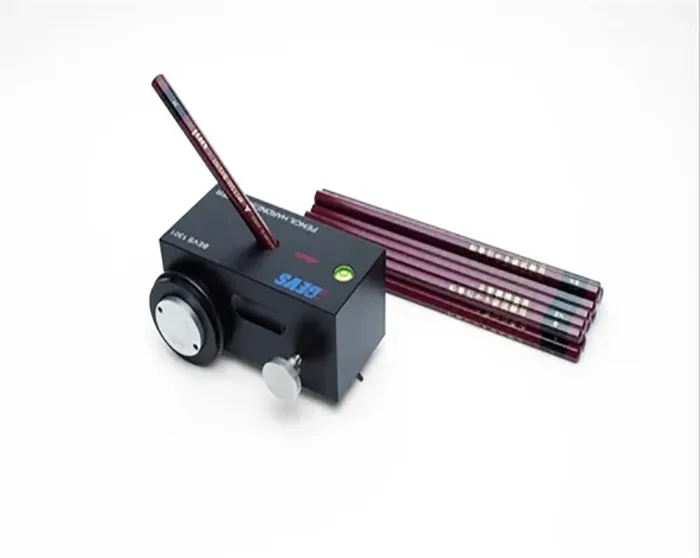
Pencil hardness test
Test method: The pencil hardness of the coating is determined by pushing a series of pencils of different hardness grades on the coating surface.
Inspect standards: ASTM D3363
Pass standards: The pencil is pressed down on the coating surface at a 45° angle and the load applied to the pencil lead is (7.35±0.15)N. The hardness of the hardest pencil that does not cause defects in the paint film is used to indicate the pencil hardness of the paint film. The pencil selection range is 6B-9H, and the test result should be ≥HB
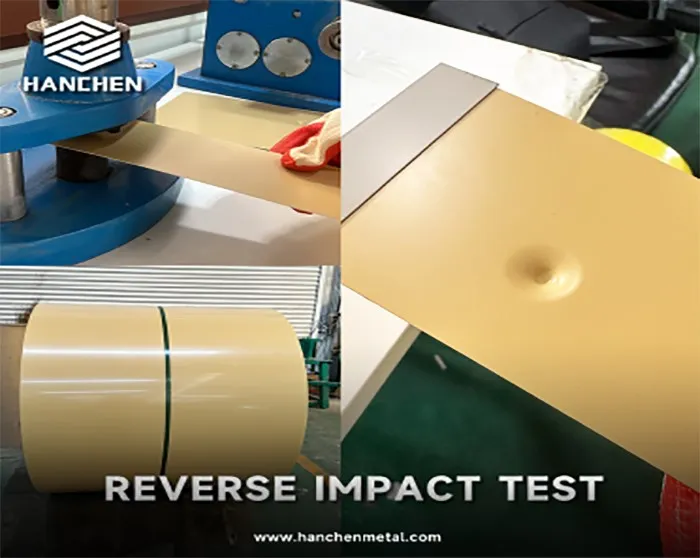
Reverse impact test
Test method: Let the free-falling hammer impact the specimen, so that the specimen deforms rapidly to form a convex area, and check whether the coating in the convex area is peeling off or cracking, so as to evaluate the coating's ability to resist peeling or cracking,stick the tape to the impacted area and tear it off quickly to check whether the coating is peeling or cracking
Standard: ASTM D 2794
Past standard: Select the appropriate tension according to the thickness of the paint film, and the test result should be ≥20kg.cm
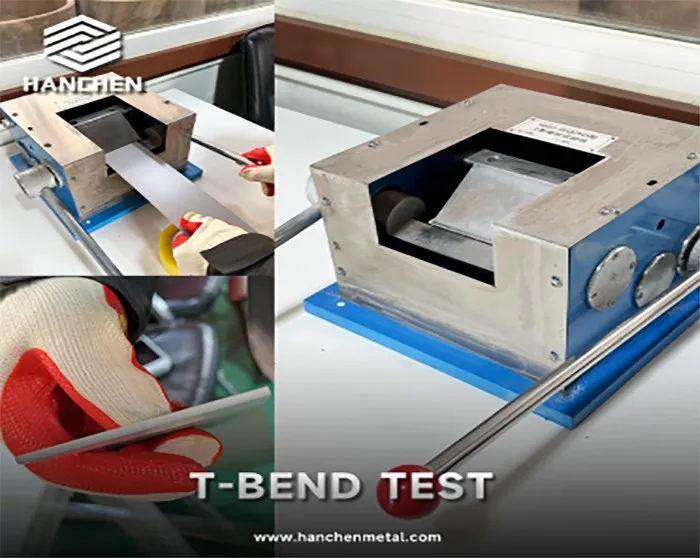
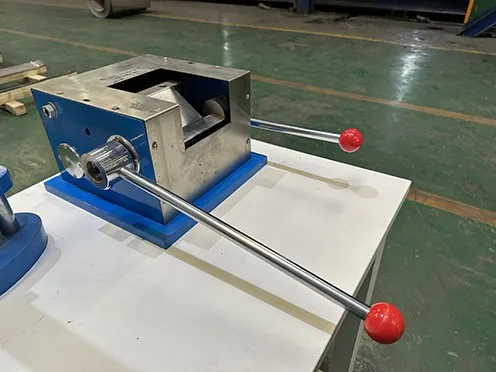
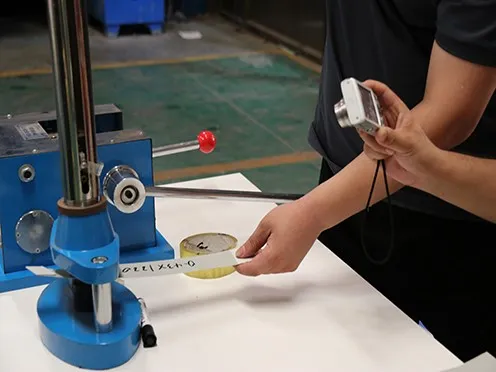
T-bend Test
Test method: Clamp the sample on the bending instrument, then fold it 180° toward the outside of the coating, tighten it with the bending instrument to make it completely parallel and stick it with tape to check whether the adhesion of the coating is peeling off
Standard: ASTM D4145
Pass standard: If the coating is not cracked, it will be counted as 0T; if cracking is found, bend it on this basis and then 1T, 2T, 3T, etc. can be obtained by analogy. The smaller the T value, the better adhesion of the coating. The test result should be ≤3T
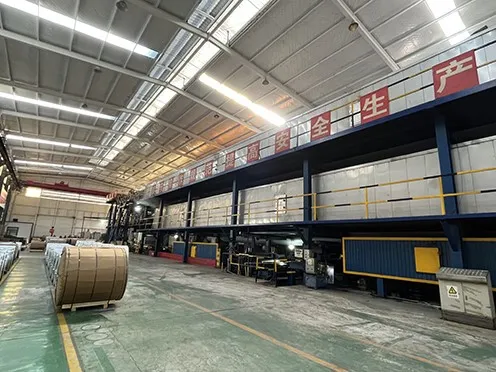
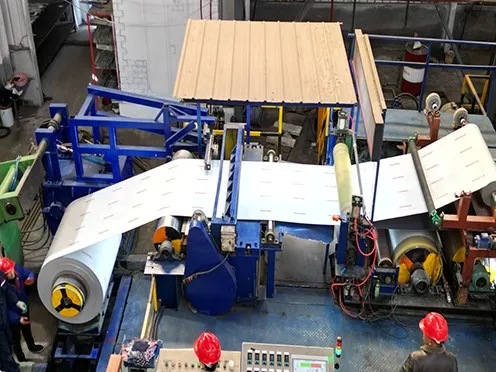
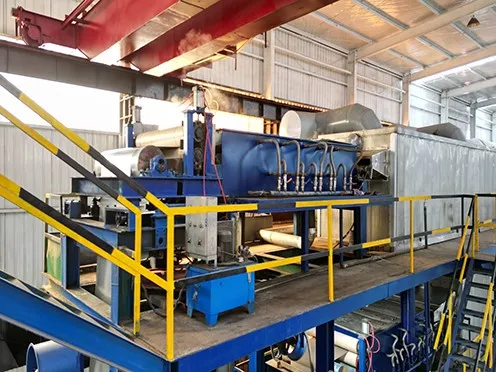
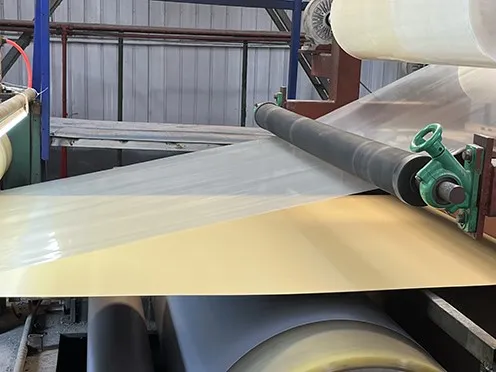
ISO9001 and ISO14001 Approved Manufacturing Facilities
Our quality inspection standard
Test drawing
Inspection result
| Test Item | Standard | National Standard | Test Report |
| Color Difference | ECCA T3 | △E<= 2.0 | △E<= 1.5 |
| Gloss Difference | ECCA T2 | <= 10 | <= 10 |
| Coating Thickness | ECCA T1 | Min 14 Micron | 25UM |
| Pencil Hardness | ASTM D3363 | >= HB | >= HB |
| T-Bend | ASTM D4145 | <= 3T | <= 2T |
| Cross-cut test | ASTM D3359 | >=3B | >= 3B |
| Reveres Impact | ASTM D2794 | >= 20Kg.cm | >= 50Kg.cm |
| Boiling Water Resistance | GB/T 17748 | 2h no change | 2h no change |
| Solvent Resistance | ASTM D2248 | 200times paint | 200times paint |
| Salt Resistance | ASTM B117 | 720Hrs<= Grade 1 | 720Hrs<= Grade 1 |
a PROFESSIONAL COLORED ALUMINUM cOIL MANUFACTURER
Welcome to inquire