

In January 2026, the global aluminum price market experienced a clear upward adjustment, with both the SMM aluminum price in China and the LME aluminum price showing strong overall gains. The aluminum price trend throughout the month reflected a market supported by firm production costs and relatively tight supply, rather than short-term speculation.
From a broader aluminum market perspective, January established a higher price range for aluminum products, directly impacting downstream sectors such as aluminum coil and coated aluminum coil manufacturing. Buyers closely following the aluminum price trend increasingly recognized that short-term pullbacks did not lead to sustained price corrections.
SMM Aluminum Price Performance in January 2026
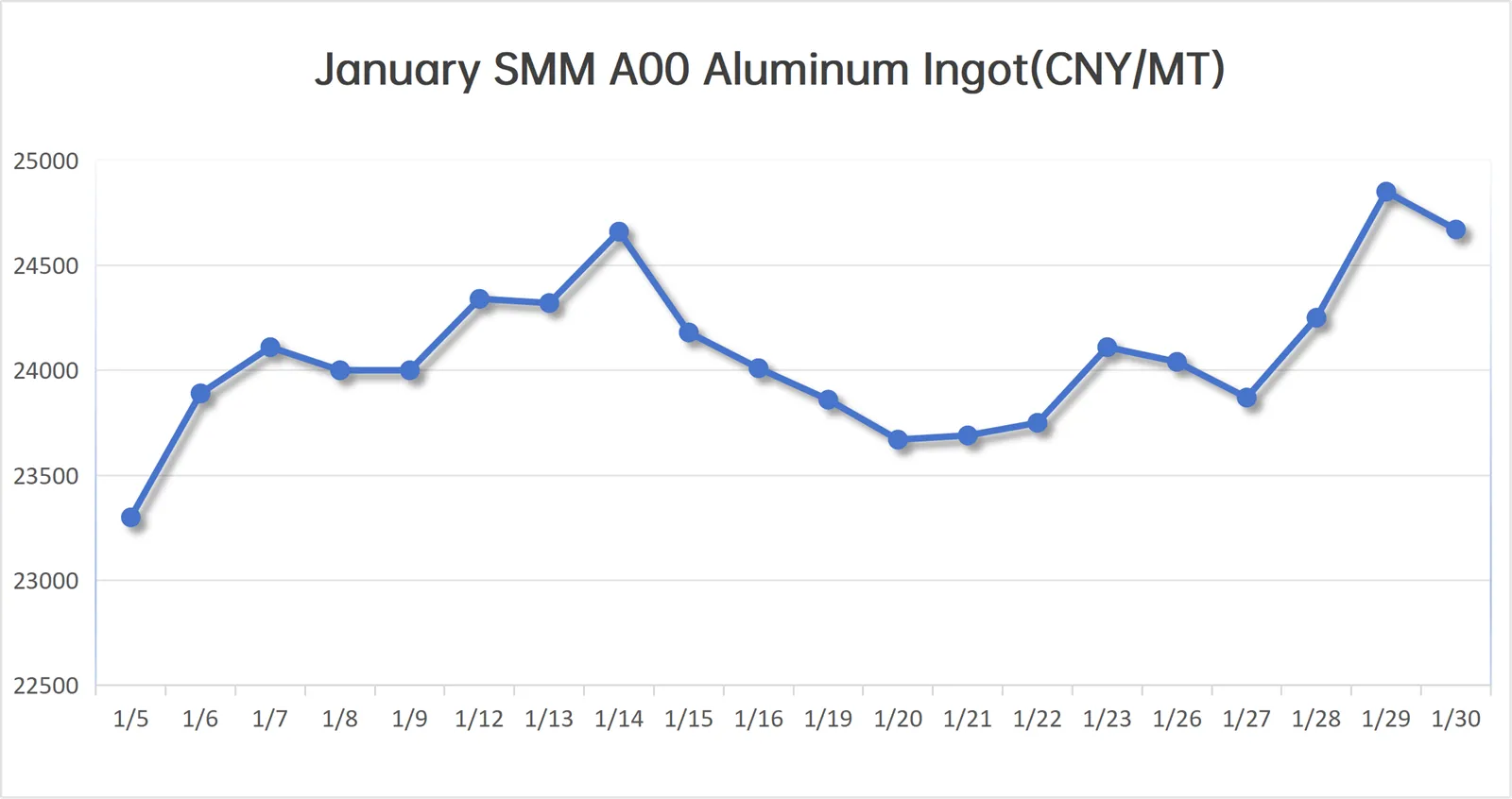
According to SMM data, the SMM aluminum price rose from around CNY 23,300/MT at the beginning of January to a monthly high near CNY 24,850/MT, closing the month at approximately CNY 24,670/MT. This upward trend in aluminum prices demonstrates that domestic aluminum prices remained well supported despite intermittent volatility.
Throughout January, the SMM aluminum price fluctuated daily, but the overall direction remained upward. For buyers of aluminum coil and coated aluminum coil, this meant that waiting for deep price drops became increasingly difficult. Each short-term correction was followed by renewed buying interest, reinforcing the higher aluminum price range.
LME Aluminum Price Trend and Global Market Signals
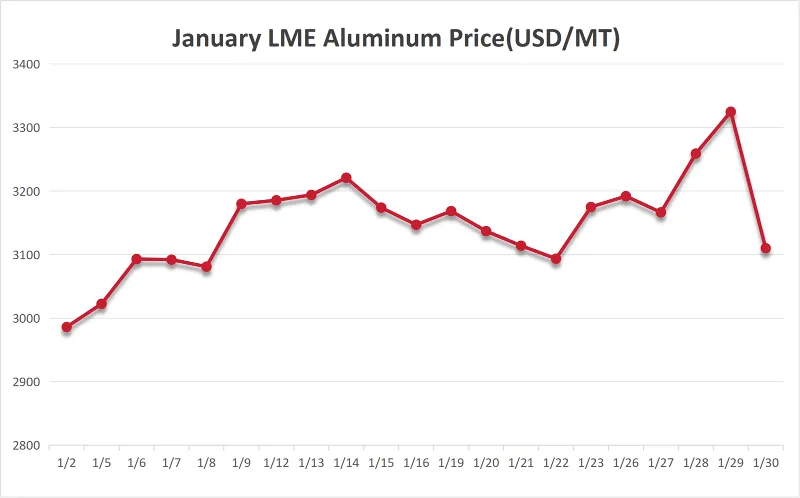
In the international market, the LME aluminum price rose even more sharply. January prices climbed from approximately USD 2,986/MT to above USD 3,300/MT by the end of the month. This strong LME aluminum price trend confirms that the global aluminum market is experiencing similar cost-side pressures as the domestic Chinese market.
The consistency between the LME aluminum price and SMM aluminum price trends highlights increasing integration between global and regional aluminum markets. For overseas buyers sourcing aluminum coil or coated aluminum coil from China, the rising LME aluminum price directly influences export pricing mechanisms.
What This Means for Downstream Buyers and End Users
January's aluminum price behavior significantly increases procurement complexity. Rising aluminum prices combined with frequent short-term fluctuations make spot-based purchasing strategies more risky. Buyers relying on short-term price dips may find that correction windows are shorter and less predictable than before.
Raw material price increases directly translate into higher finished product costs. As aluminum prices continue to hover near monthly highs, the risk of cost pass-through intensifies, particularly for buyers operating under fixed-price sales contracts. Delayed procurement under such conditions may lead to margin compression or production scheduling challenges.
At the same time, the elevated price environment does not necessarily imply overheating demand. Instead, it reflects a market where supply elasticity is limited, meaning that prices can remain elevated even without strong demand growth.
Procurement and Planning Considerations Under Current Market Conditions
Early engagement with customers is essential. Confirming production schedules and expected delivery timelines helps reduce uncertainty for both sides.
Suppliers should clearly communicate how base aluminum pricing mechanisms, such as SMM aluminum price or LME aluminum price references, are applied in quotations.
Flexible order planning and clear lead-time management can help customers better absorb aluminum price fluctuations.
In a market where deep price corrections are unlikely, providing forward-looking guidance and stable supply arrangements can strengthen long-term customer relationships.
Market Outlook and Key Takeaways
In January 2026, a higher aluminum price baseline is expected in both SMM and LME markets. While short-term volatility is likely to persist, the overall price structure suggests limited downside room under current supply and cost conditions. For downstream buyers and end users, proactive planning and disciplined procurement strategies are becoming essential rather than optional.

As aluminum prices continue to reflect structural support rather than temporary momentum, companies that adapt early-by aligning procurement strategies with market realities-will be better positioned to manage cost pressure and maintain supply continuity moving into the next quarter.