

November 2025 Aluminum Price Trend
As global aluminum prices remain highly volatile, staying informed is essential for purchasing managers, distributors, and manufacturers working with aluminum coil and color-coated aluminum coil. Below is a data-driven and customer-oriented analysis of how LME aluminum prices and SMM aluminum ingot prices moved throughout November 2025, and what it means for your procurement strategy heading into December.
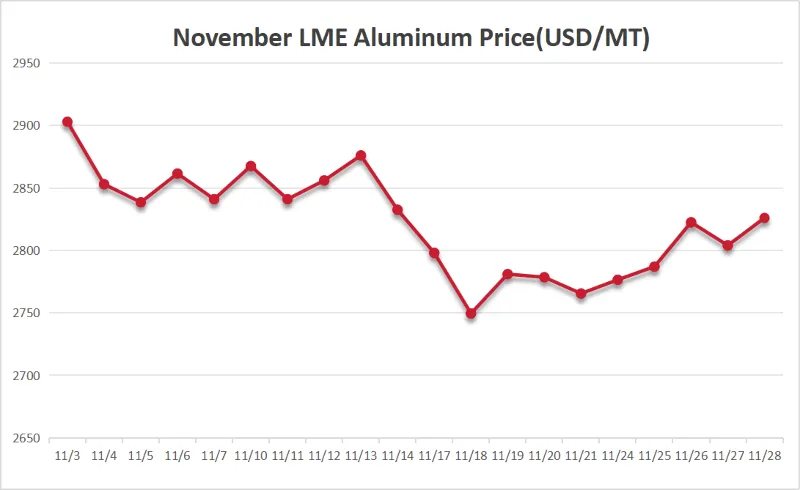
LME Aluminum Price
Highest: 2903 USD/MT
Lowest: 2749.5 USD/MT
In November, LME aluminum prices showed high-frequency fluctuations driven mainly by global macroeconomic sentiment, changes in energy-related production costs, and shifts in trading positions in the international market.
Although the LME price experienced both upward and downward adjustments during the month, the overall trend can be characterized as: High-level volatility with moderate downward pressure
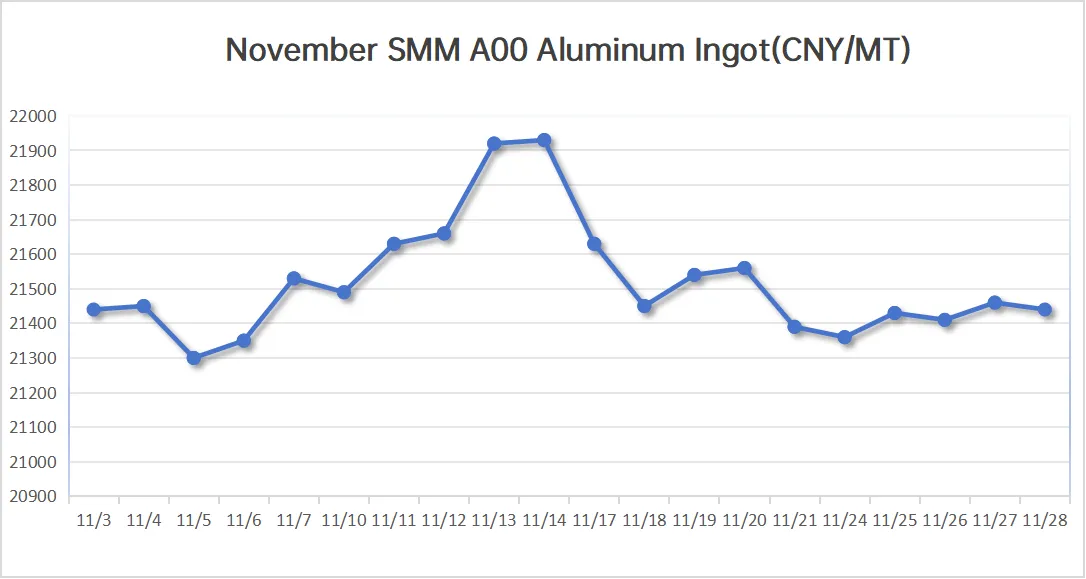
SMM Aluminum Price
Highest: 21930 CNY/MT
Lowest: 21300 CNY/MT
China's SMM A00 aluminum ingot prices also experienced significant intra-month fluctuations, reflecting the underlying dynamics of domestic supply conditions, downstream consumption, and futures-driven sentiment.
Overall, the SMM price in November can be summarized as: Fluctuating at a high level, with sharp mid-month swings
How Price Fluctuations Affect Aluminum Coil Procurement Decisions
Higher Production Costs → Higher Export Quotations
Both LME and SMM remained at elevated levels, which means:
- The coil base metal cost increased
- Coating material and processing cost premiums remain firm
- Export offers reflect these cost changes
Difficulties in Long-Term Price Fixing
Due to unstable raw material costs:
- Suppliers may shorten quotation validity periods
- Long-term price commitments become challenging
- Buyers relying on long production cycles face higher exposure to price risk
Purchasing Early Can Reduce Exposure
Considering the strong volatility:
- Early orders allow buyers to avoid sudden cost spikes
- Securing production slots ensures timely delivery
- Reducing dependence on short-term spot market purchases minimizes risk
Strategic Stock Planning Recommended
For businesses with stable consumption volumes:
- Moderately increasing inventory during price stabilization periods can lower procurement costs
- Considering partial price-lock agreements improves budgeting accuracy
For businesses planning December or early 2026 production schedules, this environment suggests that staggered purchasing or partial forward procurement may help balance cost control and supply security. Large-volume users, in particular, may benefit from negotiating flexible pricing arrangements that reduce exposure to monthly volatility.
For international buyers, the most practical strategy under the current conditions is to focus on supply stability, quality consistency, and optimized logistics. Partnering with manufacturers that maintain reliable inventory and production capacity allows procurement teams to avoid last-minute price spikes or supply disruptions.
If you plan to place new orders or adjust your procurement strategy, our team can provide tailored recommendations based on your industry, project timeline, and volume requirements.
Note: The data in this article are for informational purposes only and should not be considered financial or investment advice.