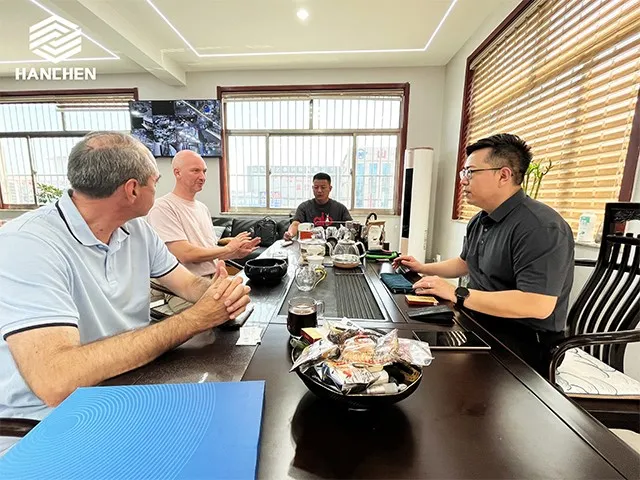
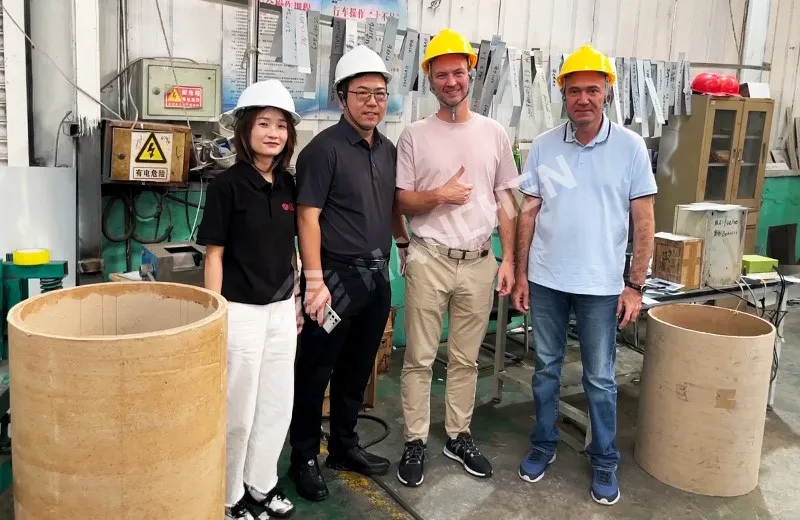
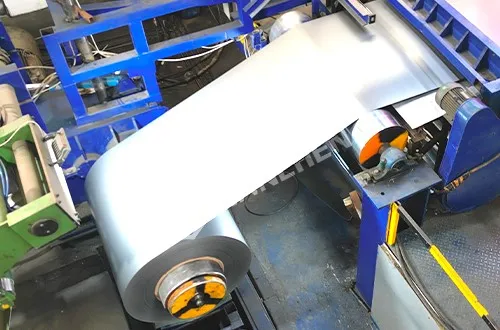
During the factory tour, the clients observed the entire coil coating process, from chemical pretreatment to precision roller coating and curing ovens. The visitors paid particular attention to two aspects directly related to sandwich panel production:
- Surface flatness and coating adhesion, to ensure strong bonding with polyurethane and mineral wool cores during lamination.
- Thickness and width accuracy, to guarantee consistent panel strength and seamless joint installation on construction sites.
In the testing laboratory, Hanchen Metal engineers demonstrated performance checks such as T-bend flexibility, impact resistance, and MEK testing, reinforcing the coils' reliability under demanding conditions.
Procurement Concerns
A technical negotiation followed the tour, where both sides discussed how different coating systems align with sandwich panel applications.
PE coating
Service life of 8–10 years. Recommended for cost-sensitive projects such as temporary warehouses or interior partition panels, where exposure to harsh weather is limited.
HDP coating
Service life of 10–15 years. Suitable for industrial buildings and standard roofing systems exposed to variable weather, offering a balance between durability and cost efficiency.
PVDF coating
Service life of 20–30 years. The premium choice for façade panels, cold storage facilities, and high-visibility roofing, where long-term color retention and anti-corrosion properties are critical.
From a procurement standpoint, the Georgian clients raised questions about:
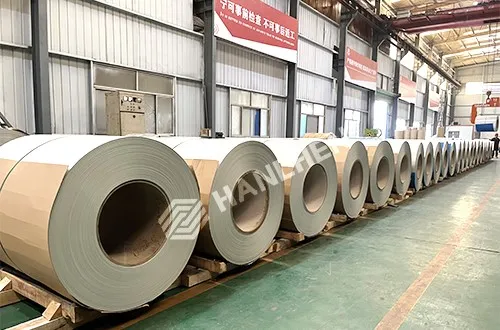
Color consistency across large batches
Long-term availability and stable lead times
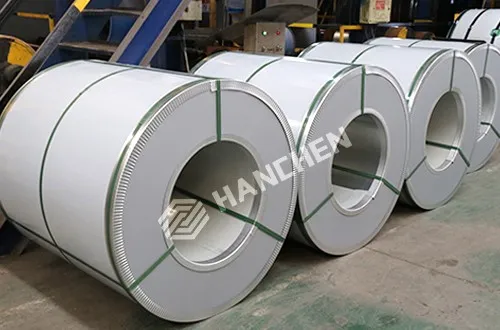
Packaging and coil protection during shipping
Expanding Cooperation in Sandwich Panel Applications
The clients shared details about upcoming projects involving modern logistics centers, energy-efficient warehouses, and commercial facades. Hanchen Metal reaffirmed its commitment to supporting these projects with customized coil dimensions, strict QC processes, and reliable export logistics to Georgia and beyond.