

PVDF coatings offer the best performance in terms of long-term fade resistance and chalk resistance. Now in order to be a pvdf coating it needs to have resin called kynar 500 or hylar-5000 these are resins that help hold that system together for long-term performance.
Pvdf coatings are known for having long-term performance with regards to fade resistance, chalk resistance and gloss retention.
What is PVDF Coating on Aluminum?
PVDF coatings were popularized because of their use on aluminum surfaces. Aluminum is widely used in architectural structures, cladding, roofing, and curtain walls which need an extra layer of protection from weather damage and harsh external conditions.
PVDF coating on aluminum surface is a resin-based coating system with good adhesion to aluminum surface and thermally stable bonding with an unreactive chemical nature.
Before getting into the PVDF coating process here's a quick look at the PVDF coating composition.
Pigment
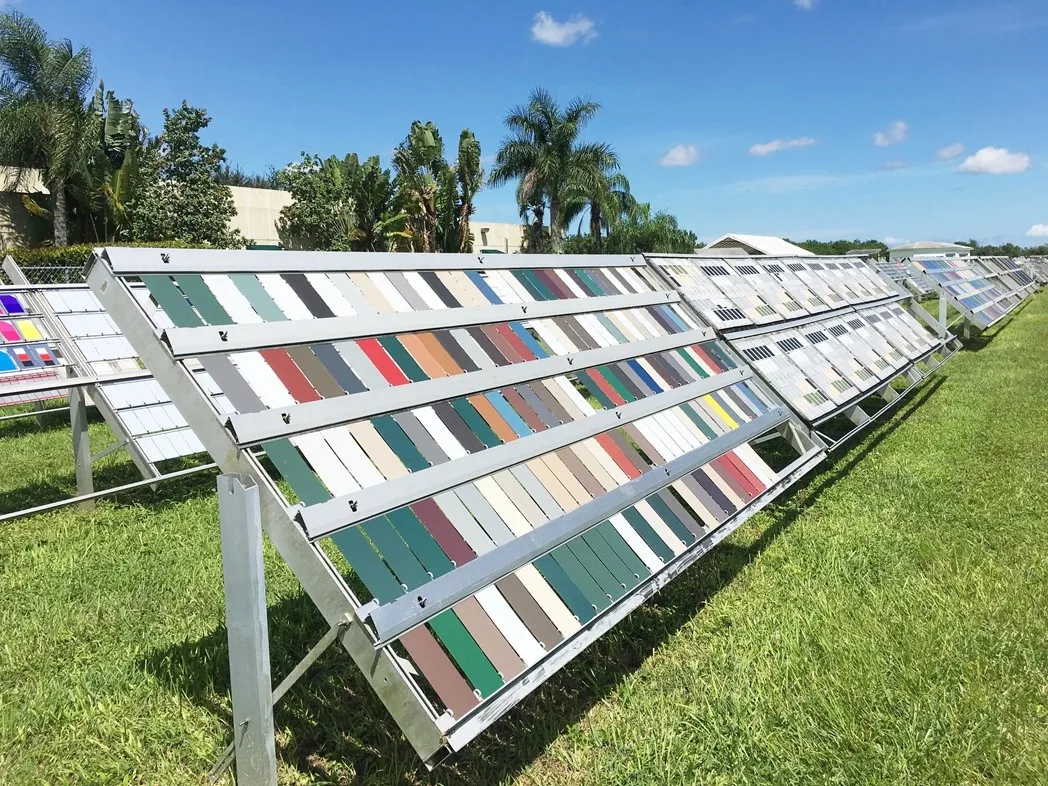
PVDF Coatings can be easily colored for aesthetics.
In fact, it's a viable solution to painting over aluminum which is not as long-lasting. There are many color choices and finishes from organic to metallic colors which determine the color retention and durability.
Resin
Resins make up for most of the coating thickness. Resins bind together the pigment and adhere to the aluminium surface. They also contribute to the performance of PVDF coatings.
Solvents
Adding a solvent to the mixture makes the application of the PVDF coating possible. They decrease the viscosity of the resin and allow it to uniformly cover the metal surface. Acetone is a common example.
Additives
The choice of additives depends on the manufacturer and trademarked PVDF coating. Additives affect the coating's resistance, thermal performance, UV resistance, rust resistance, gloss, and other features.
PVDF Coating Process
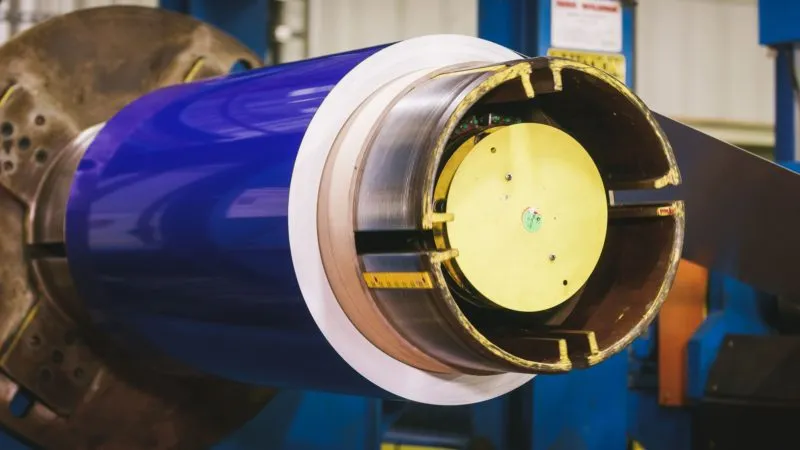
After selecting the proper proportions of PVDF coating and adjusting the opacity through pigment, the PVDF Coating Process constitutes the following steps.
1. Surface Preparation
This is the most important step for the PVDF coating process. Aluminum surface is degreased using alkaline cleaners and later scrubbed and brushed to remove any scale and dirt. To remove rust, chemical agents like acid are used and the substrate is rinsed thoroughly.
2. Primer
A primer is used on the raw substrate before the coating. This prepares the aluminum for the top coat, and improves adhesion and surface evenness for a neat coating.
3. Top Coat
Top coat is the thickest layer on the aluminium substrate. Top coat holds the resin mixture manufactured prior to PVDF coating process. Once poured pigment can further be added for aesthetic accuracy. The top coat directly impacts the durability, abrasion resistance, corrosion properties, and UV resistance.
Since resin-based coatings use a solvent, it is important to cure the coating after this step so the solvent evaporates, leaving the top coat and aluminum surface to adhere.
4. Clear Coat
Clear coating is important to ensure the PVDF coated substrate will last. Clear coating prevents the pigment from easily fading under constant exposure to the sun and acts as a preventive layer holding the entire coating together. Clear coat is thinner than all other layers of PVDF coating.