

Pre-painted aluminum coils are widely used in architectural façades, roofing, signage, curtain walls, and industrial applications because of their lightweight structure, high corrosion resistance, and aesthetic versatility. But not all color-coated aluminum coils are created equal, the durability and long-term performance of these coils greatly depend on how well the paint baking (thermal curing) process is managed. For buyers considering premium pre-painted aluminum coils, understanding the role of the bake process can help ensure you select coils that will stand the test of time.
The Paint Baking Process Explained
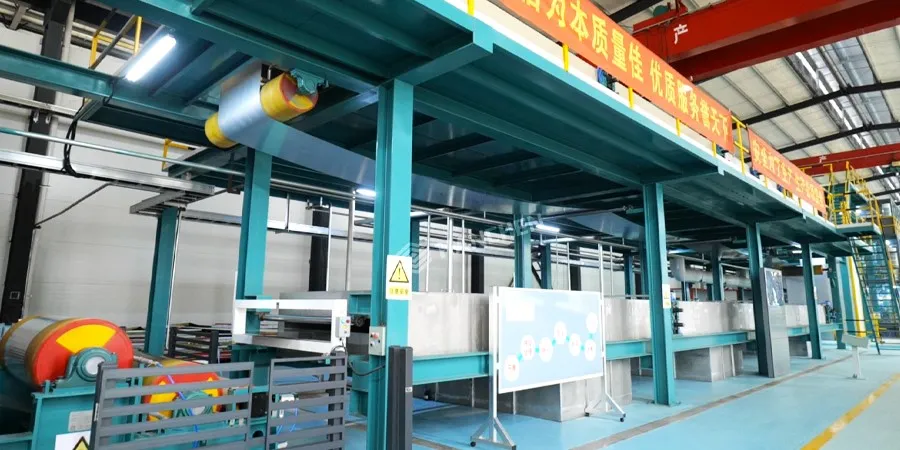
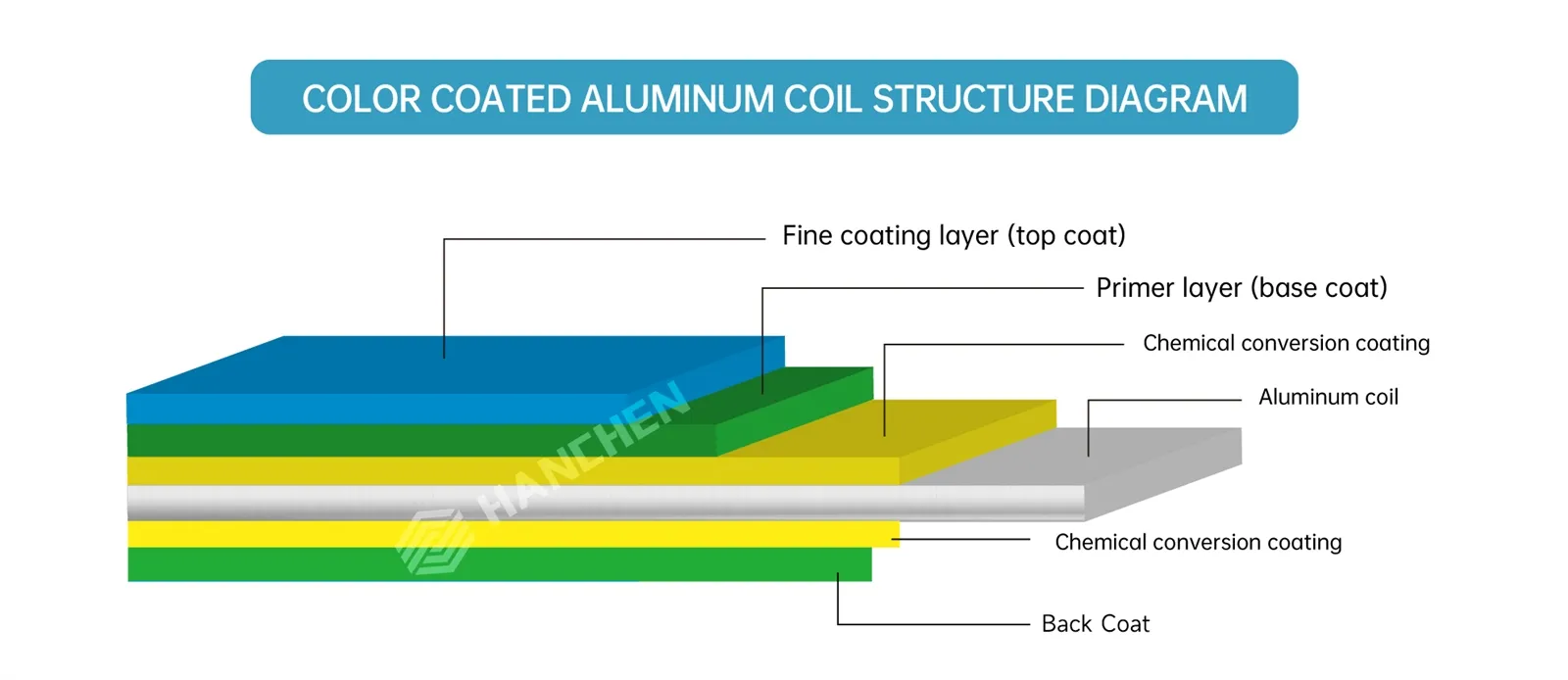
Surface Pretreatment
Before any paint is applied, the aluminum substrate is cleaned, degreased, chemically etched, and often given a conversion coating (e.g., chromate or non-chrome). This pretreatment is crucial for the adhesion of the coating. Without proper surface preparation, even a well-baked top coat cannot bond strongly to the aluminum, and the long-term durability of pre-painted aluminum coils will suffer. Many reputable producers of pre-painted aluminum coils emphasize rigorous cleaning and pretreatment steps to minimize delamination risk.
Primer and Top-Coat Application
Once the surface is ready, a primer layer is often applied, followed by one or more top coats. For premium pre-painted aluminum coils, common coating resins include polyester (PE) and fluoropolymer (PVDF). The primer improves adhesion and acts as a barrier; the topcoat provides color, gloss, and protection. Typical coating thicknesses are around ≥ 18 µm for polyester and ≥ 25 µm for PVDF in many industrial specifications.
Thermal Curing (Paint Baking)
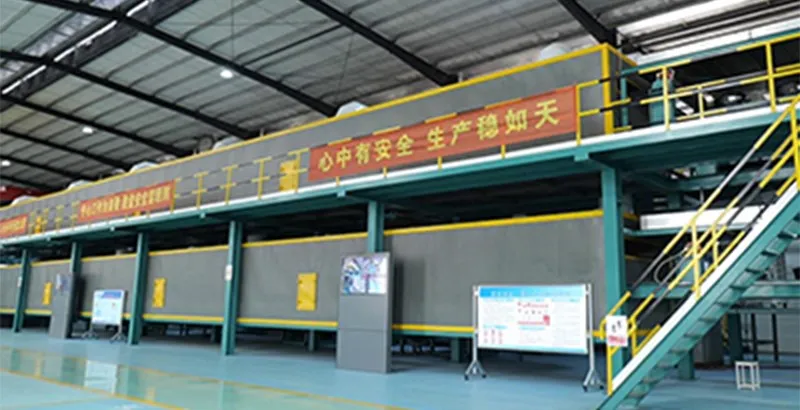
The coating layer enters a high-temperature oven where thermal curing (paint baking) takes place. During this step:
- Solvents evaporate.
- Chemical cross-linking reactions occur within the paint resin.
- The coating film consolidates and hardens.
Proper control of baking parameters - such as temperature, dwell time, and oven atmosphere (airflow, humidity) - ensures that the coating reaches full cure without compromising the substrate or causing warping. The quality of this cure significantly influences the final performance of pre-painted aluminum coils.
Why Paint Baking Critically Influences Long-Term Durability
Thermal curing promotes cross-linking in the resin, especially for fluoropolymers like PVDF. A higher cross-link density results in a tighter molecular network, which delivers superior chemical resistance, mechanical strength, and cohesion. For premium pre-painted aluminum coils, this means better ability to resist degradation under UV exposure, moisture, pollutants, and temperature fluctuations.
Well-controlled baking ensures strong adhesion between the coating and the aluminum substrate and internal cohesion within the coating layers. If the baking process is insufficient (under-cured), adhesion may be weak, making the pre-painted aluminum coil vulnerable to peeling, blistering, or delamination over time. Conversely, over-curing can degrade the resin, reduce flexibility, or even distort the aluminum base.
For premium pre-painted aluminum coils that use PVDF coatings, a properly baked finish exhibits outstanding resistance to UV light, temperature swings, and moisture. According to coating suppliers, these baked PVDF films can offer decades of color and gloss retention.
Even polyester (PE) coatings, when baked correctly, deliver good UV resistance and hold up in exterior applications.
After baking, the coating attains a balance of hardness and elasticity. This is critical for processes like bending, forming, punching, cutting, or deep drawing. A well-baked, pre-painted aluminum coil can endure mechanical deformation without cracking or chipping at the edges because the coating is robust but still flexible.
Optimal Temperature and Dwell Time
- Temperature: Needs to be high enough to fully cure the coating, but not so high as to distort or anneal the aluminum coil.
- Dwell Time: Sufficient time is required to complete the cross-linking reactions, evaporate solvents, and ensure a homogeneous film.
- Achieving the correct temperature-time profile is a balancing act - too little, and the coating undercures; too much, and you risk resin degradation or substrate damage.
Implications for End-Use Applications
Architectural Façades and Roofing
For buildings exposed to sunlight, rain, and thermal cycling, pre-painted aluminum coils with properly baked PVDF coatings deliver long-lasting color stability, resistance to chalking, and minimal maintenance.
Industrial Components
HVAC panels, signage, and equipment housings benefit from durable pre-painted aluminum coils that retain their protective film after forming and handling.
Lifecycle Cost Efficiency
Although premium pre-painted aluminum coils may have a higher upfront cost, their superior durability and low maintenance translate into lower cost of ownership and fewer replacements over time.
Regulatory and Warranty Assurance
High-quality coatings with verified baking processes and test reports support compliance with building standards and help secure long-term warranties, giving end customers greater confidence.
Are you ready to source durable, long-lasting pre-painted aluminum coils for your next architectural or industrial project?