

When you are sourcing pre-painted aluminum coil (also known as color-coated aluminum coil), the choice of substrate, whether hot-rolled aluminum coil or cold-rolled aluminum coil, plays a critical role in determining the final coated product's surface appearance, coating adhesion, manufacturability, and long-term performance. For procurement specialists, architects, fabricators, or coating processors, comprehending the subtle but important differences between these two types of aluminum coil substrates is essential to ensure the finished color-coated aluminum coil lives up to expectations in quality, durability, and consistency.
Manufacturing Processes: Hot-Rolled vs Cold-Rolled Aluminum Coil Substrate
- Hot-rolled aluminum coil is produced by heating aluminum slabs or ingots above the recrystallization temperature and passing them through hot-rolling mills in multiple passes. This high-temperature process allows efficient thickness reduction and shaping.
- Cold-rolled aluminum coil, on the other hand, typically starts from a hot-rolled coil or cast coil that has been cooled; the material is then processed at or near room temperature through cold-rolling mills to further reduce thickness, refine surface finish, and improve dimensional precision.
Differences Between Hot-Rolled and Cold-Rolled Aluminum Coil
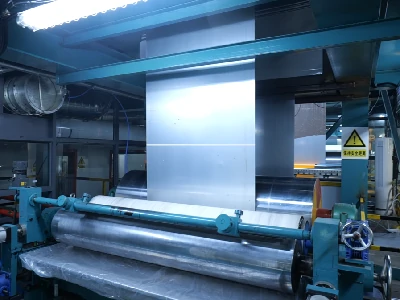
- Cold-rolled aluminum coil exhibits a much smoother, brighter, and more uniform surface, often described as "near-mirror" or high-finish, with superior flatness and consistency. This makes it ideal for applications requiring a high-quality visual appearance or perfect coating adhesion.
- Hot-rolled aluminum coil usually has a rougher surface finish, possible scale, slight surface irregularities or oxidation, and less consistent flatness. For decorative or coating-sensitive applications, this may require additional surface preparation before coating.
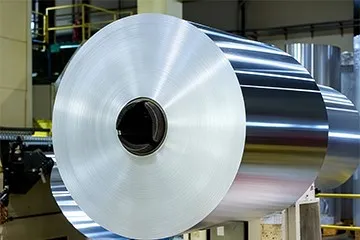
- Because hot rolling occurs at high temperature allowing dynamic recrystallization, hot-rolled aluminum coil tends to have good ductility and elongation, making it easier to bend, shape, draw or form. This is beneficial when parts require deep drawing, bending, or substantial deformation.
- Cold-rolled aluminum coil, after cold working, usually has increased strength and hardness due to strain hardening. This can lead to greater yield strength and better rigidity, yielding a more stable final product when structural strength or stiffness is required.
Implications for Pre-Painted Aluminum Coil (Color-Coated Aluminum Coil) Use
Given the above differences, the choice between hot-rolled and cold-rolled aluminum coil substrate impacts how well a pre-painted aluminum coil / color-coated aluminum coil will perform, both in the coating stage and final application:
Surface preparation & coating performance
Cold-rolled aluminum coil, with its smoother and more uniform surface, often yields more consistent and higher-quality pre-painted finish, making it highly suitable for decorative panels, curtain walls, building façades, furniture panels, appliance panels, or any application where appearance matters.
Dimensional stability & fabrication accuracy
For applications requiring tight thickness tolerance, precise panel dimensions, consistent flatness after painting, or precise cutting/forming, cold-rolled coil is advantageous, helping ensure the final coated product meets dimensional and flatness specifications.
Cost-performance tradeoff
Cold-rolled coil processing is more complex and costlier than hot rolling, so color-coated coils built on cold-rolled substrate may carry higher cost. However, for high-end architectural, decorative or precision applications, the improved surface finish, coating adhesion, stability, and overall quality justify the premium. Meanwhile, for cost-sensitive projects or less demanding applications, hot-rolled substrate with sufficient post-processing may be acceptable.
Long-term behavior and reliability
For outdoor, high-stress or load-bearing applications or where coating longevity, corrosion resistance, and substrate stability matter, choice of substrate greatly affects performance. Cold-rolled coils tend to give more consistent results for coating adhesion and flatness, while hot-rolled coils may offer better ductility and tolerance to deformation under stress.

Selecting the appropriate aluminum coil substrate, hot-rolled or cold-rolled, is a fundamental decision that shapes the performance, quality, and cost-effectiveness of pre-painted aluminum coil (color-coated aluminum coil). Cold-rolled aluminum coil stands out when high surface quality, tight dimensional control, excellent coating performance, and stability are priorities. Hot-rolled aluminum coil, with its superior ductility and formability, remains a viable option for applications where shaping, bending, or economic cost is more important than surface-finish perfection.